In a luxury wedding, beauty is never only about flowers, beautiful tableware or exceptional linens. True elegance comes from the way every element works together — and one of the most important, yet often underestimated, aspects of wedding design is the layout of the tables.
At Monica G. Events | Maison MG, designing destination luxury weddings in Europe means thinking about a reception not only from the perspective of the guests seated at the tables, but also as a complete visual composition.
And very often, the difference between a beautiful reception and an extraordinary one begins with symmetry, proportion and balance.
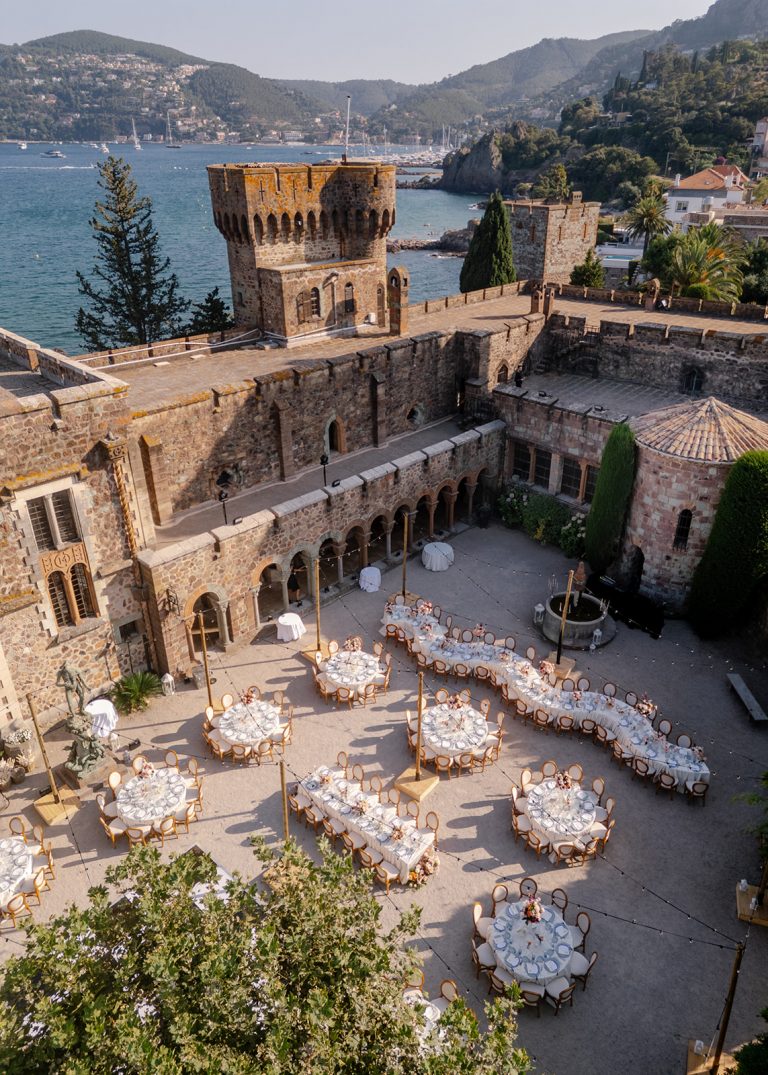
A Wedding Reception Should Be Designed from Above
Before choosing the final position of a single table, I always consider the venue as a whole.
Seen from above, the reception should create a harmonious picture. Round tables, rectangular tables, imperial tables or more contemporary shapes must have a visual relationship with one another and, above all, with the architecture of the venue.
In a Tuscan villa, a French château, an Italian palazzo or an elegant Mediterranean property, the existing architecture already provides lines, perspectives and focal points. The table plan should respect and enhance them rather than fight against them.
This is why a professional layout is much more than finding enough space for a certain number of guests. It is part of the event design itself.
Symmetry Creates a Sense of Luxury
There is something naturally sophisticated about symmetry.
When tables are positioned according to carefully considered axes, distances and proportions, the entire reception immediately feels more refined. Guests may not consciously understand why the room or garden feels so harmonious — but they perceive it.
Luxury is often found precisely in these details.
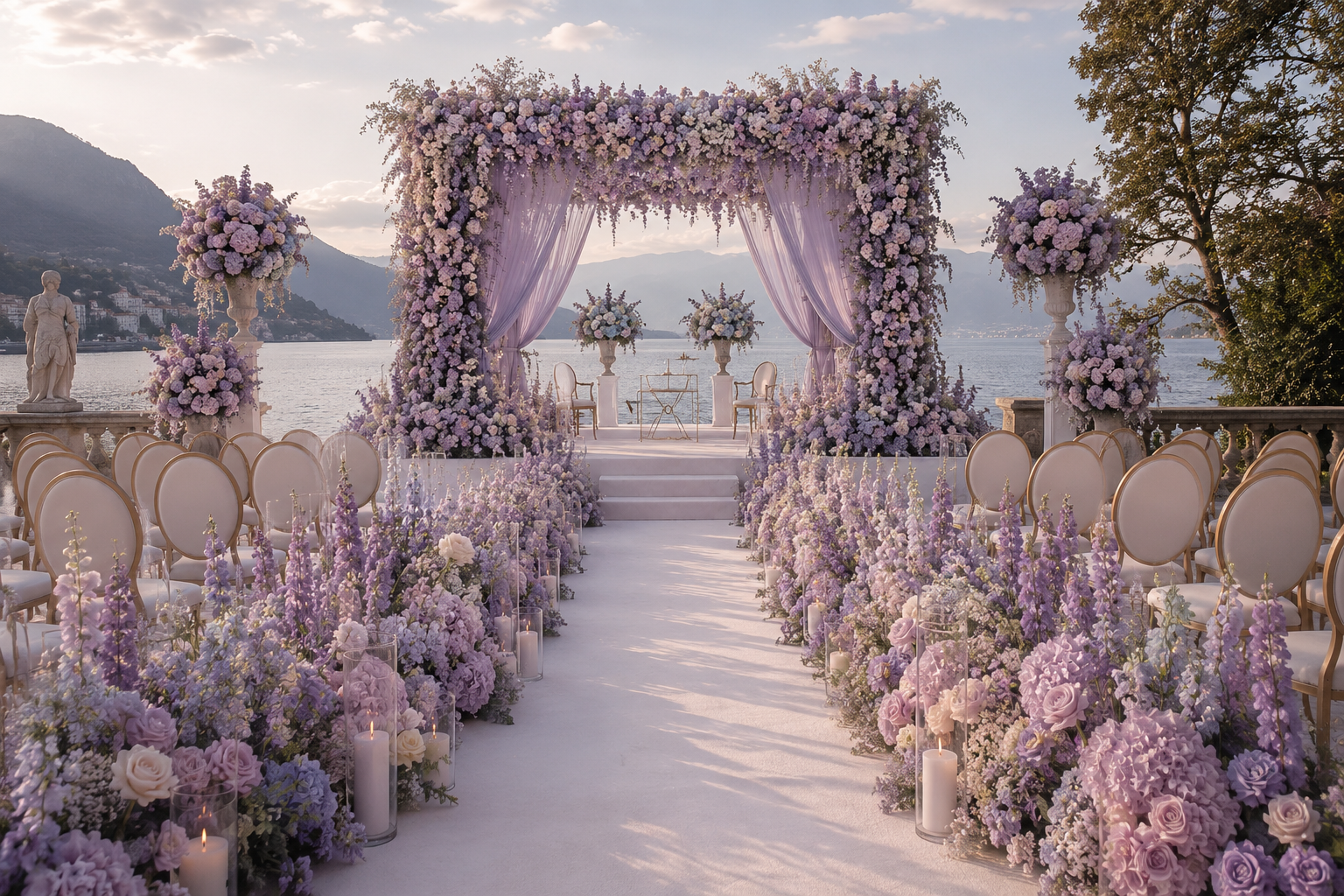
A beautifully centred bridal or family table, identical distances between surrounding tables, balanced floral compositions and carefully created perspectives can completely transform a space.
This does not mean that every wedding needs to be rigidly symmetrical. Sometimes an intentionally asymmetrical composition can be magnificent. But even apparent asymmetry needs balance and visual logic.
Nothing should look accidental.
The View from Above Has Become Part of the Wedding
Today, we also have to think about how a wedding will be photographed and filmed.
Elevated photography and videography can reveal the entire reception in a single image: the tables, flowers, linens, candles, chairs, dance floor and architecture become one composition.
A perfectly designed table plan can create an extraordinary photograph.
Conversely, even the most beautiful flowers and expensive dinnerware can lose some of their impact if the overall layout appears irregular or visually unbalanced when seen from above.
For a destination luxury wedding in Europe, where couples often choose spectacular historical properties precisely for their beauty, respecting the geometry and perspective of the venue becomes even more important.
Flowers, Linens and Dinnerware Are Part of the Geometry
Once the table layout has been established, the details complete the composition.
The proportions of the floral centrepieces must correspond to the dimensions and shapes of the tables. High and low arrangements can be alternated to create rhythm, but their positioning should be carefully studied.
The same principle applies to tablecloths and luxury linens. Their colours, patterns, textures and draping influence the visual balance of the entire reception.
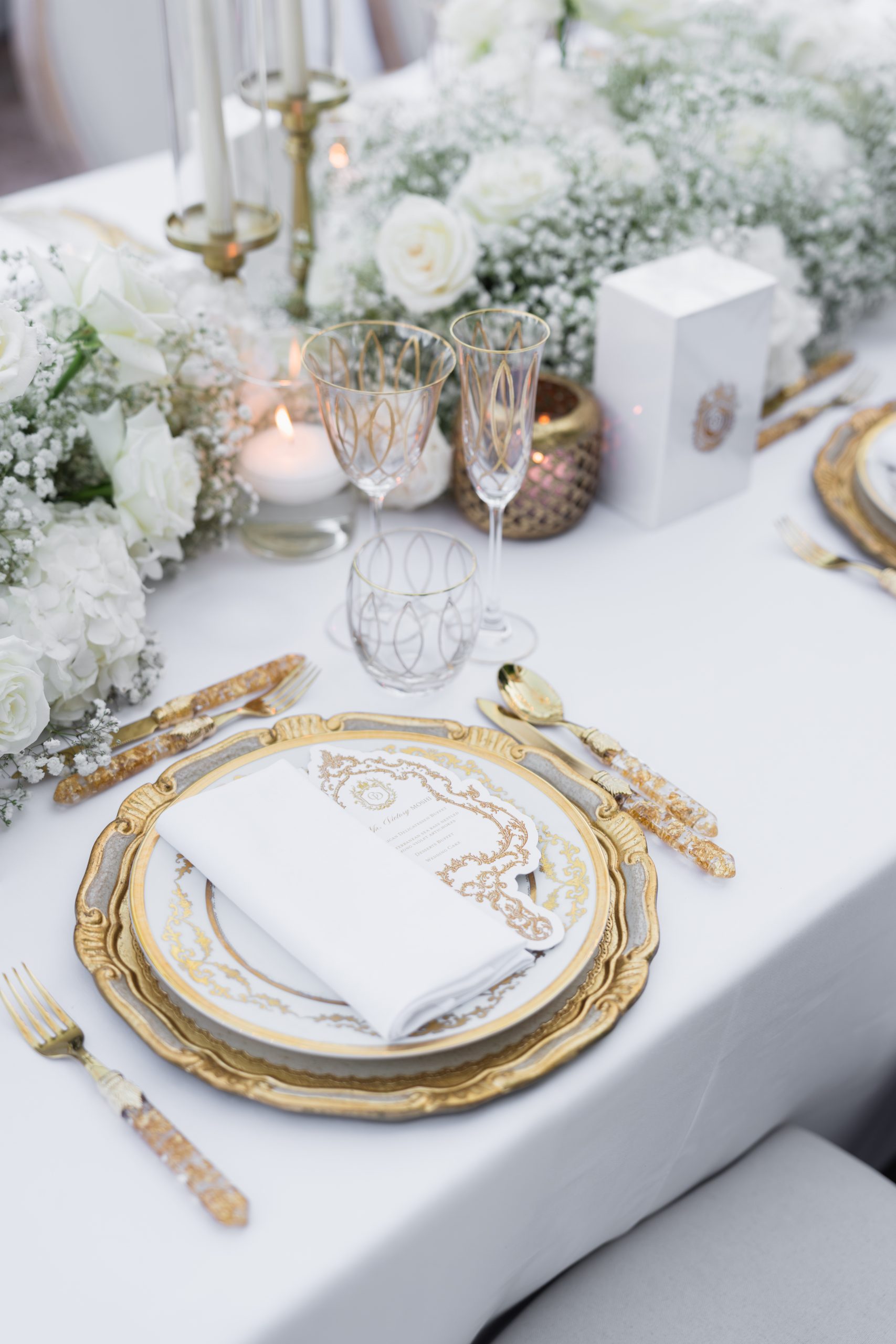
Dinnerware, charger plates, glassware, cutlery, menus and napkins then create another layer of design.
Individually, each element can be exquisite. Together, they need to tell the same story.
This is why I never consider flowers, furniture, table clothing or dinnerware as separate decorative choices. They are all part of one composition.
Designing for the Venue
One of the greatest privileges of organising luxury weddings in Europe is working within extraordinary settings.
A Renaissance villa in Tuscany requires a different approach from a château on the French Riviera. A historic palazzo in Rome cannot be designed in the same way as a contemporary property in Monaco or a Mediterranean estate in Spain.
The table plan should respond to the architecture, gardens and natural surroundings.
Doors, fountains, staircases, façades, terraces and existing architectural axes can become part of the scenography. A beautifully positioned table can frame a view; a perfectly aligned aisle can draw the eye towards a historic façade; a symmetrical dinner layout can emphasise the grandeur of a château.
The venue itself becomes part of the décor.
Luxury Is in the Overall Picture
When designing a wedding, it is very easy to concentrate on individual details: a spectacular floral arrangement, a beautiful plate, an embroidered napkin or an exceptional chair.
But luxury wedding design requires us to step further back.
I always ask myself: What will the entire celebration look like when seen as one image?
From above, from the entrance of the room, from the terrace overlooking the dinner, and eventually through the photographer’s lens.
The answer lies in proportion, perspective, rhythm and balance.
Because the most successful wedding designs are not simply collections of beautiful objects. They are complete compositions, where architecture, tables, flowers, linens, dinnerware and lighting come together effortlessly.
And when every element has found exactly the right place, the result is not only beautiful.
It feels inevitable.
Monica G. Events | Maison MG
Luxury Wedding Planning & Design in France, Italy, Spain and across Europe
Destination Luxury Weddings in Europe